| Credit assists adoption |
| Intermediate means of transport increase profitable farm production, trade and provide hire income, but the high cost is a constraint for many. There is much evidence that credit can assist the adoption of local transport solutions. Manufacturers and stockists may also need credit. |
|
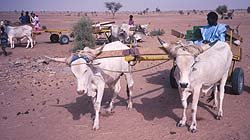
Credit was important for the spread of carts in Senegal |
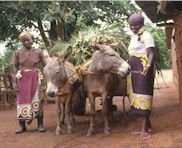 Credit for carts in Tanga, Tanzania Credit for carts in Tanga, TanzaniaThe Tanga Animal Draft Power Project found that men and women wanted to buy donkey carts but they could not afford the purchase cost. Rural incomes and employment opportunities were low. Credit repayments were difficult for such expensive items. This was partly solved by combining credit with a labour-intensive, rural road maintenance programme. Farmers were contracted to bring gravel to resurface roads, and the income from this programme made it possible for farmers to repay loans. The carts were used for many other purposes besides gravel haulage. Women and men both benefited from the spread of donkey carts. Photo: Women with a donkey cart bought with credit in Tanga, Tanzania |