| Build on experiences | ||
|
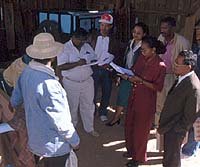
 Farmers in Guinea discussing technology options |
|
|
Self-critical monitoring and objective evaluation are fundamental to the success of programmes developing or promoting local transport solutions. Without monitoring, enthusiasm for particular technologies may lead to lack of objectivity and irrational optimism despite disappointing adoption patterns. It is necessary to include potential users (of different genders, status, purchasing power, etc) and other stakeholders in planning, monitoring and evaluation procedures. Peer-to-peer discussions can help stakeholders talk honestly about their needs, concerns and willingness to invest in technologies. Information on user-perspectives must be cross-checked with objective sales and use patterns. Photo: Transport planners learning from the experience of an artisanal cart manufacturer in Madagascar |
 Monitoring requires reliable stakeholder opinions
 |
Regular objective evaluation is also vital. Many programmes fear the potential for criticism that may come with external evaluations. Sympathetic evaluators are often selected. This is more comfortable in the short term, but restricts the potential for learning and programme changes. Self-evaluation, aided by an independent external person, can be useful and may involve both programme staff and key stakeholders. If someone from a transport project in another country assists an evaluation, the learning process benefits two programmes simultaneously. Photo: Prototype bicycle side car in Sri Lanka |
 Rigorous
self-evaluation with networking partners
Rigorous
self-evaluation with networking partners